From diving operations to digital inspecions
Published on: 12/11/2026
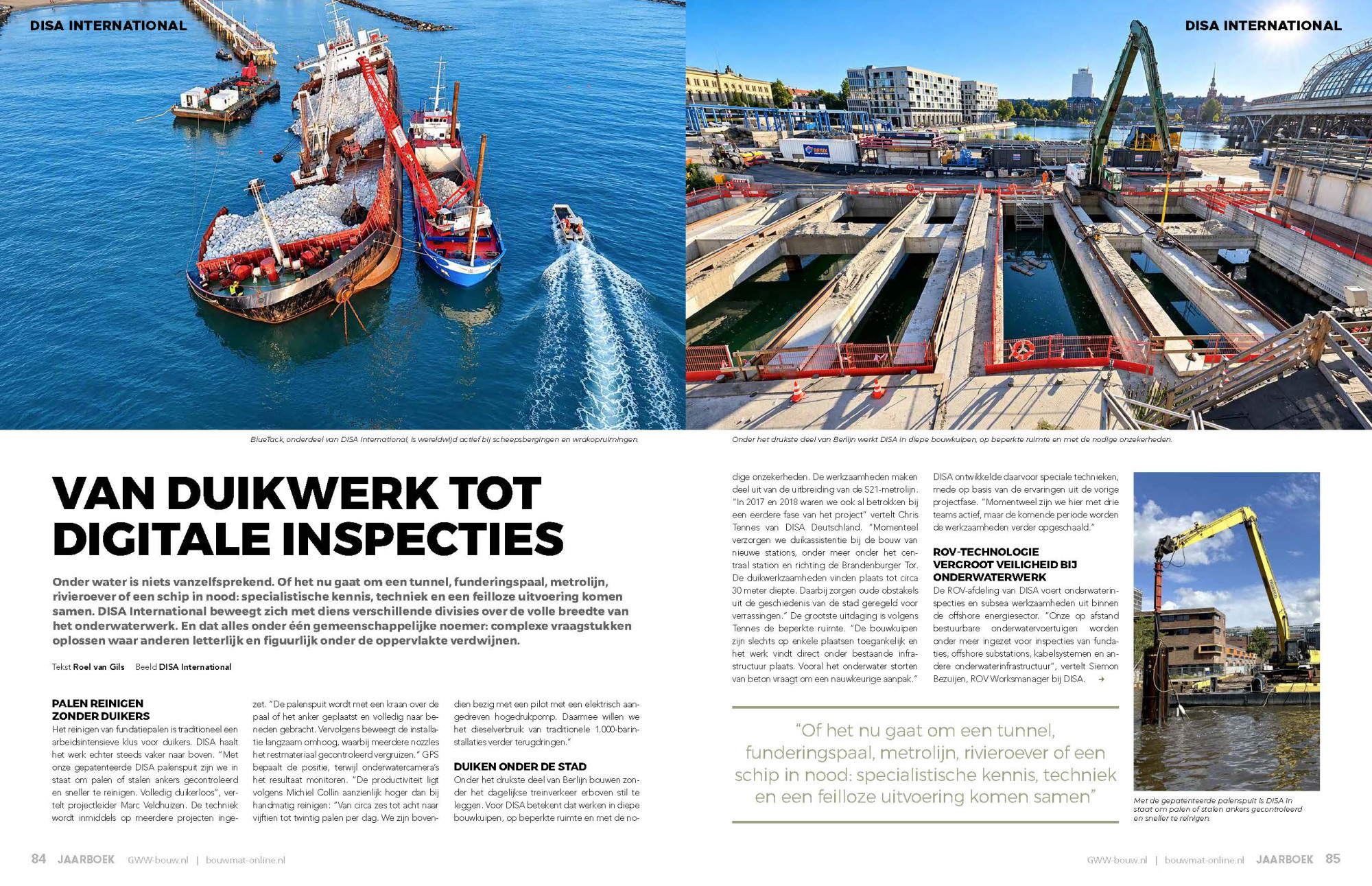
Underwater, nothing can be taken for granted. Whether it concerns a tunnel, foundation pile, metro line, riverbank or a vessel in distress, specialist knowledge, technology and flawless execution come together. DISA International, through its various divisions, operates across the full spectrum of underwater activities. All under one common denominator: solving complex challenges where others literally and figuratively disappear beneath the surface.
CLEANING PILES WITHOUT DIVERS
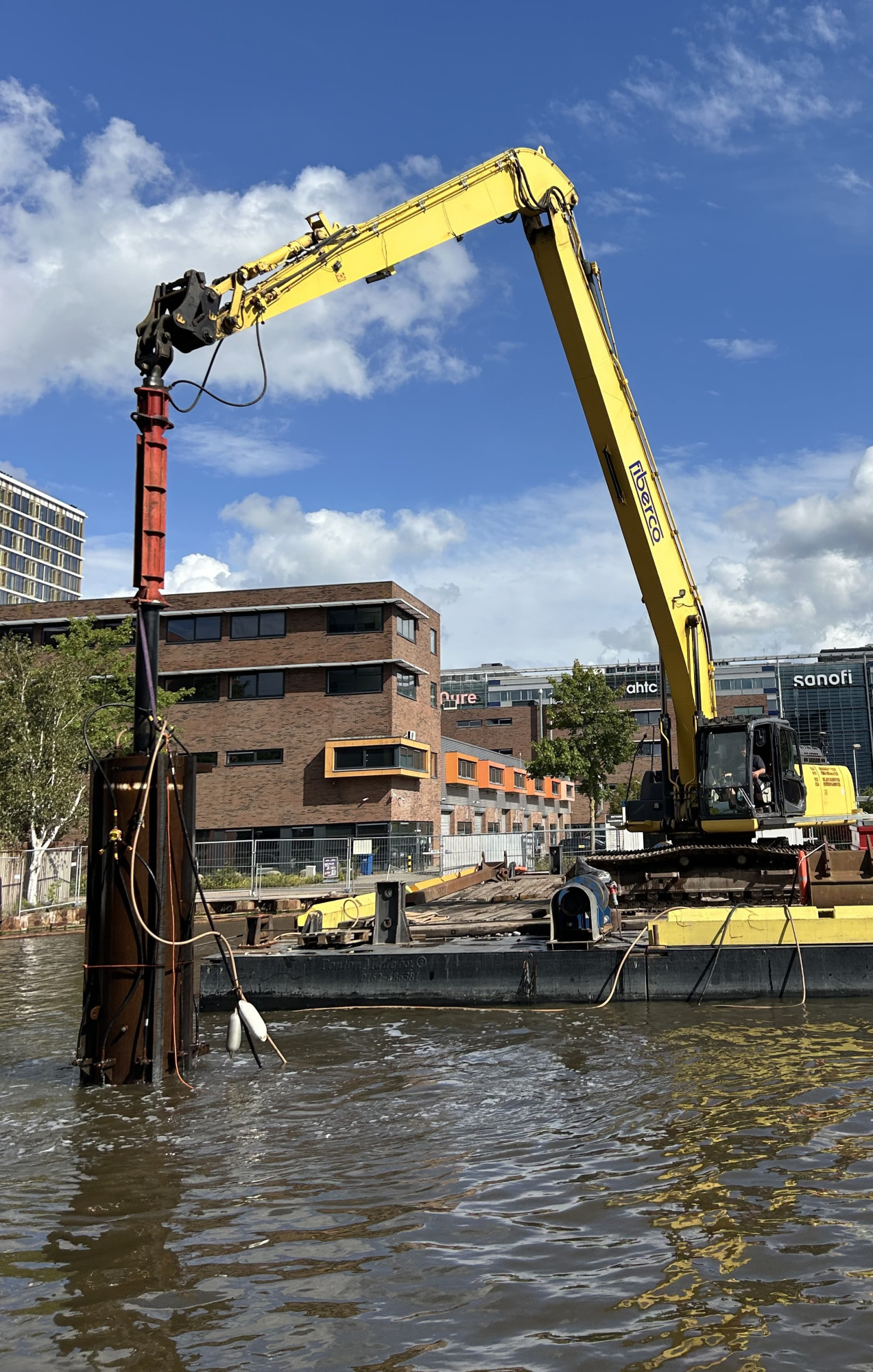
Cleaning foundation piles has traditionally been a labour-intensive task for divers. However, DISA is increasingly bringing this work to the surface.
“With our patented DISA pile-cleaning system, we are able to clean piles or steel anchors in a controlled manner and at a higher speed, entirely without divers,” explains project manager Marc Veldhuizen.
The technology is already being used on several projects. “The pile-cleaning system is positioned over the pile or anchor using a crane and lowered all the way down. The installation then slowly moves upwards, while multiple nozzles break down the residual material in a controlled manner.”
GPS determines the position, while underwater cameras monitor the results. According to Michiel Collin, productivity is considerably higher than with manual cleaning: “From approximately six to eight piles per day to fifteen to twenty piles per day. We are also currently running a pilot project with an electrically powered high-pressure pump. Our aim is to further reduce the diesel consumption of traditional 1,000-bar systems.”
DIVING BENEATH THE CITY
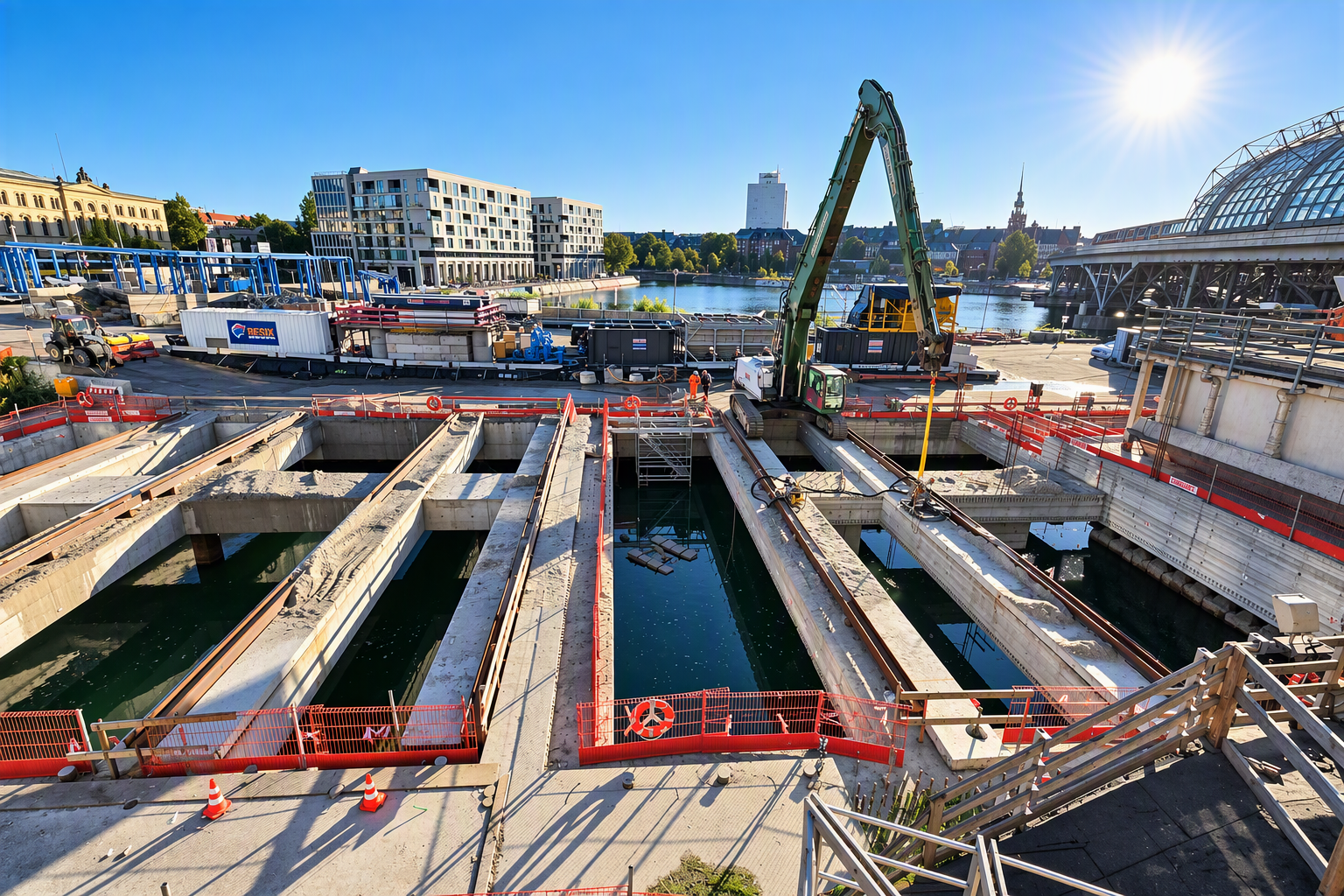
Building beneath the busiest part of Berlin without interrupting the daily train traffic above. For DISA, this means working in deep construction pits, within confined spaces and with the necessary level of uncertainty. The works are part of the extension of the S21 metro line. “In 2017 and 2018, we were already involved in an earlier phase of the project,” explains Chris Tennes of DISA Deutschland. “We are currently providing diving support for the construction of new stations, including underneath the central station and towards the Brandenburg Gate. Diving operations are carried out at depths of up to approximately 30 metres. Old obstacles from the city’s history regularly create unexpected challenges.” According to Tennes, the biggest challenge is the limited space. “The construction pits are only accessible at a few locations, and the work is carried out directly beneath existing infrastructure. Underwater concrete placement in particular requires a very precise approach.” DISA developed special techniques for this purpose, partly based on experience gained during the previous project phase. “At the moment, we have three teams working here, but the activities will be scaled up further in the coming period.”
ROV TECHNOLOGY INCREASES SAFETY IN UNDERWATER OPERATIONS
DISA’s ROV division carries out underwater inspections and subsea activities within the offshore energy sector. “Our remotely operated underwater vehicles are used for inspections of foundations, offshore substations, cable systems and other underwater infrastructure,” explains Siemon Bezuijen, ROV Works Manager at DISA.
“The fleet ranges from compact inspection systems to powerful Work Class ROVs, which can be equipped with cameras, sonar, sensors, manipulators and specialist tooling depending on the assignment.” In 2027, DISA will expand its capacity with two additional Work Class ROV systems. “The use of ROVs improves safety because fewer personnel are exposed to underwater risks. In addition, the systems continuously provide visual and measurement data, contributing to reliable inspections and reporting.” In 2026, for example, DISA carried out large-scale ROV inspections at various offshore wind farms in Northern Europe, where large numbers of assets had to be inspected within limited weather windows. “ROVs and divers complement each other in these operations: the systems can quickly provide an overview of the situation, while divers carry out specialist work.” Through investments in capacity, tooling and expertise, DISA is preparing for increasingly complex subsea projects.
DIGITAL RIVER INSPECTION
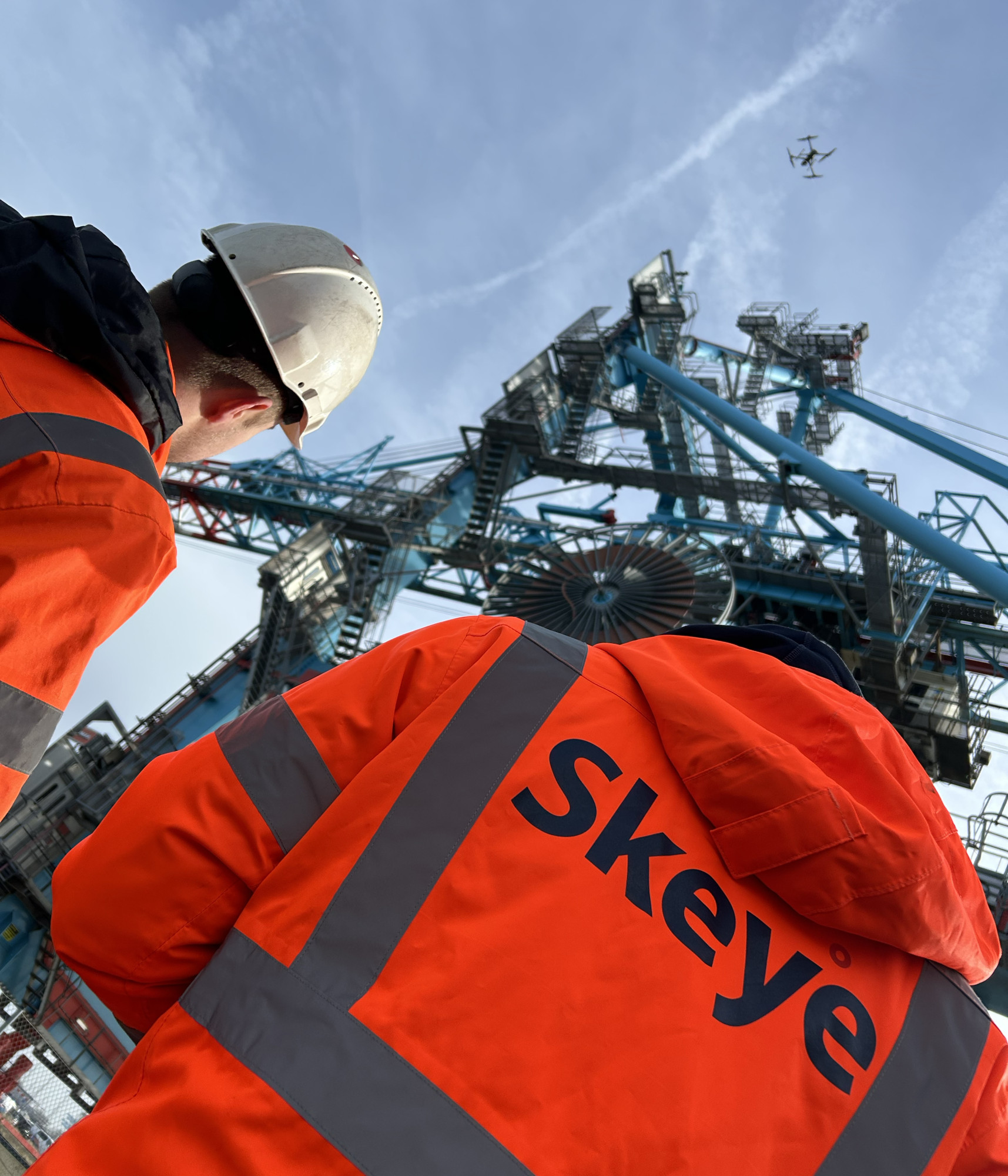
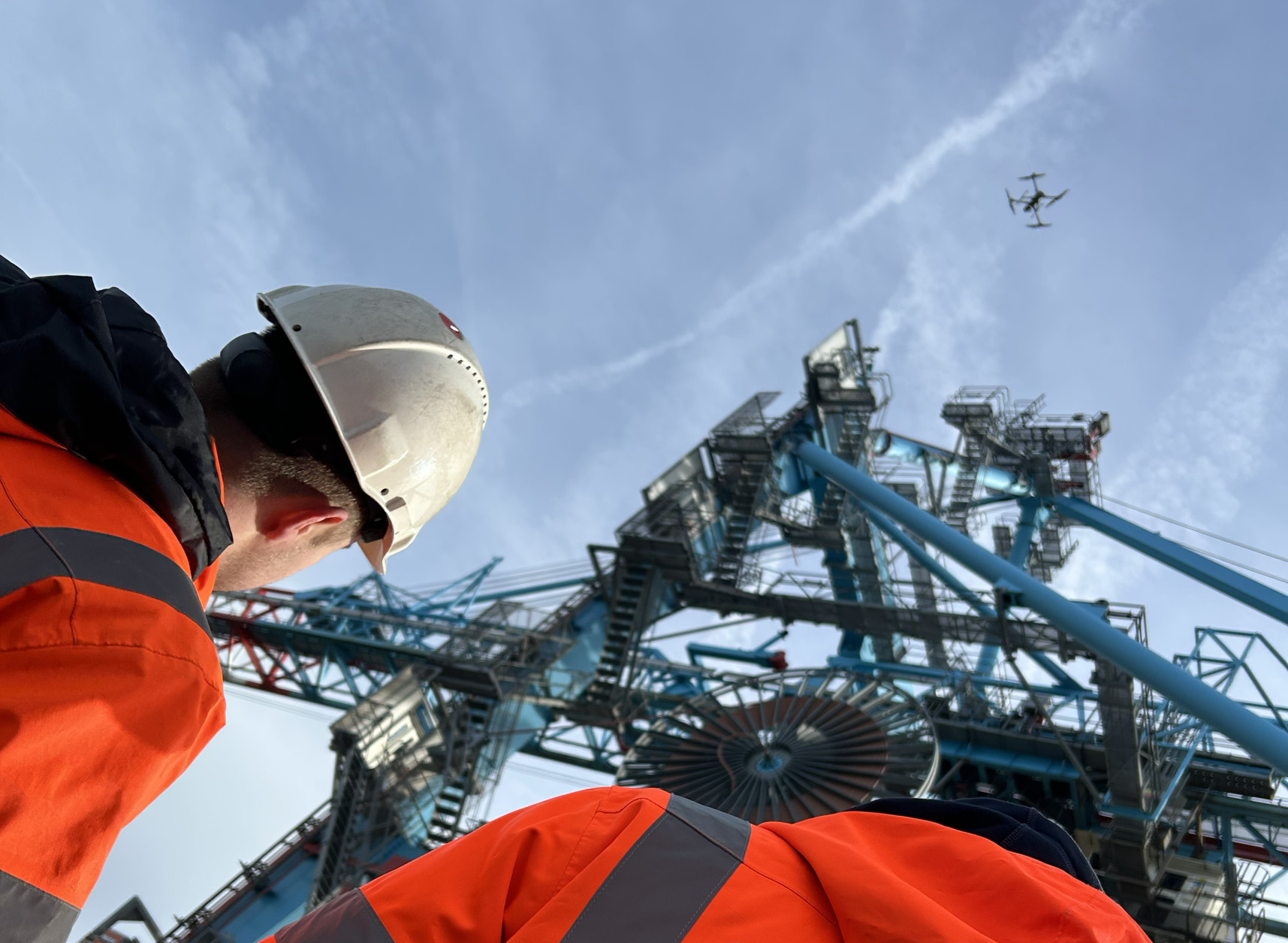
How do you inspect six miles of riverbank in the heart of London while simultaneously establishing a reliable baseline survey? For the Port of London Authority (PLA), Skeye, part of DISA International, developed a digital approach combining drones, LiDAR and 3D models. “On behalf of Jennings & Cooke, we mapped the condition of the Thames quay wall,” explains Patrick Rickerby, Technical Director at Skeye. “Traditionally, inspections were largely carried out visually using pen and paper. We made the transition to a fully digital process.” Because the quay wall is fully visible at low tide, neither divers nor ROVs were required. “Operating from a compact pontoon, we carried out drone flights over a period of three days. The images were combined with LiDAR data and survey data covering a stretch of approximately six miles. The result is a photorealistic 3D mesh model supplemented by a point cloud. Through an online 3D viewer, the asset manager can navigate directly to specific locations and view the corresponding images.” Skeye also developed inspection criteria for issues including missing stones, vegetation and subsidence. “All observations were incorporated into a Power BI dashboard, with scores for each section. This makes critical locations immediately visible and allows maintenance and repairs to be planned in a targeted manner.” The survey serves as the baseline for an annual recurring inspection, allowing changes and the effectiveness of completed repairs to be monitored over time.
CONTROLLED VESSEL SALVAGE AND WRECK REMOVAL
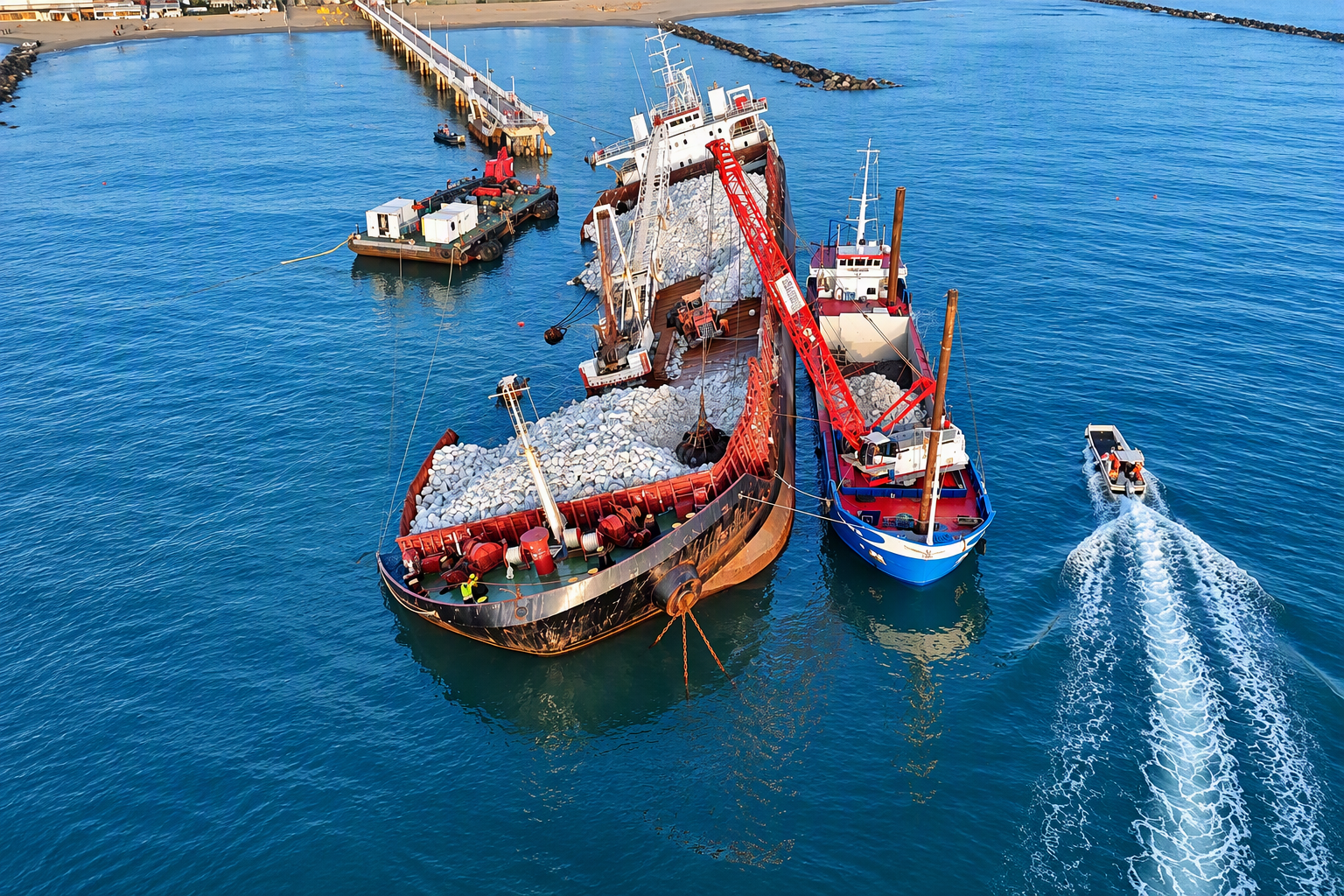
When a vessel is in distress, the primary objective is to prevent an incident from developing into an environmental disaster. BlueTack, part of DISA International, operates worldwide in vessel salvage and wreck removal. A recent salvage operation in Italy demonstrates the amount of preparation and specialist diving work involved. “In January 2025, the vessel Guang Rong struck a pier in Marina di Massa,” says Dirk de Jong, founder of BlueTack. “The vessel was severely damaged and remained just off the coast. It was carrying approximately 7,500 tonnes of marble, so it quickly became clear that the salvage operation would be complex.” After BlueTack and its partner Fratelli Neri were awarded the contract in July, it took several more months to obtain all the required permits. “The operation began in November. First, the entire cargo was removed using a local crane vessel. At the same time, our divers prepared the tanks underwater for pumping out, and the steering gear compartment was sealed watertight. This prevented contaminated water from entering the sea while the vessel was being refloated,” explains De Jong. “The vessel was then pumped out and refloated in a controlled manner. This was successfully completed in mid-December. The salvage operation was completed according to plan within a month and a half, after which the Guang Rong could be towed to Livorno.”
DISA combines craftsmanship with technology and a strong focus on safety. This combination enables the company to provide solutions even under challenging conditions. With the knowledge and experience gained from every project, DISA continues to further develop its services. Ready for the next challenge, both above and below the water.